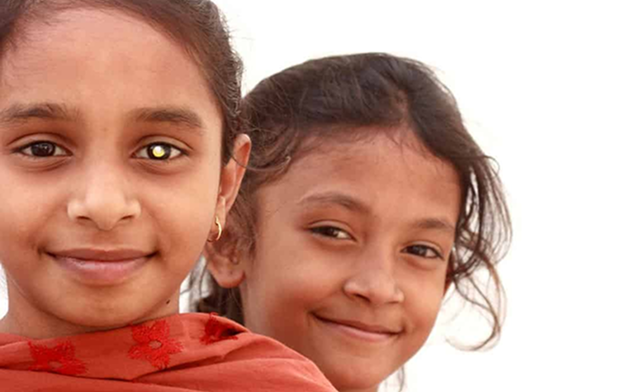
Raghav was looking through the family’s recent vacation photographs that had just arrived. He noticed that in many of them, Sneha, his 1 year old daughter seemed to have white pupils. Thinking that this was like the red-eye effect in photographs, he ignored it. A few months later, both he and his wife Chaya noticed that their daughter’s eyes were swollen and that her vision was becoming poor. Concerned, they took her to an eye specialist, who diagnosed Sneha with retinoblastoma, a disease that had affected her mother as a child and had cost her eyes. However, in Sneha’s case, the disease had advanced to a point where one of her eyes had to be removed.
In all the years I have spent in treating eye related ailments, I have seen a heart-breaking number of cases like Sneha’s, where retinoblastoma cost children their eyesight, when it could have been avoided. Retinoblastoma is a cancer of the eye that starts in the retina, the lining inside the eye that is sensitive to light. Today, retinoblastoma affects over 300 children annually in the US, but it’s India that sees the most incidences of this disease, with nearly 1500 cases emerging every year in the country. Sadly, many of these cases end up costing children their eyesight, something that can be avoided with parental awareness, especially since the disease has a hereditary component to it. Below are some of the key aspects about retinoblastoma that I strongly believe everyone should be aware of:
Retinoblastoma is a rare but serious type of eye cancer that develops in the retina—the light-sensitive tissue at the back of the eye. It primarily affects young children, usually under the age of five. While the diagnosis can be alarming for parents, the good news is that with early detection and proper treatment, most children recover successfully.
In this blog, we will explore what retinoblastoma is, its symptoms, how it is diagnosed, treatment options, and the importance of early intervention.
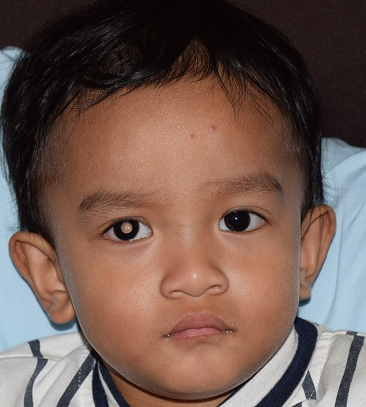
Unilateral Retinoblastoma
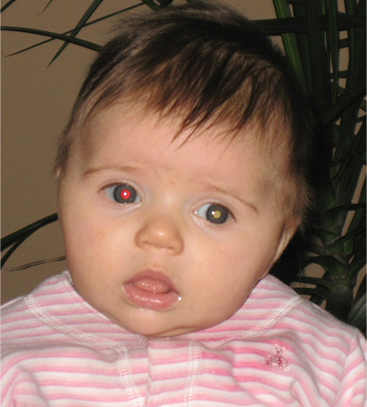
Bilateral Retinoblastoma
Recognizing the early signs of retinoblastoma can significantly improve the chances of successful treatment. Parents should be vigilant for the following
One of the most common signs. In flash photography, instead of the normal red-eye reflection, the affected eye may appear white or have a yellowish glow.
These treatments are used for small tumors.
Laser therapy (Photocoagulation): Uses laser beams to destroy tumor cells.
For larger tumors, radiation therapy may be required:
External beam radiation: Directs radiation at the tumor from outside the body.
Brachytherapy (Plaque Radiotherapy): A small radioactive implant is placed near the tumor to target cancer cells.
Families dealing with retinoblastoma may benefit from counseling and support groups.

Author Bio
Oculoplasty, Orbit & Ocular Oncology Specialist